Picking the Right Infrared Sensor: A Sensory Comparison for Practical Projects
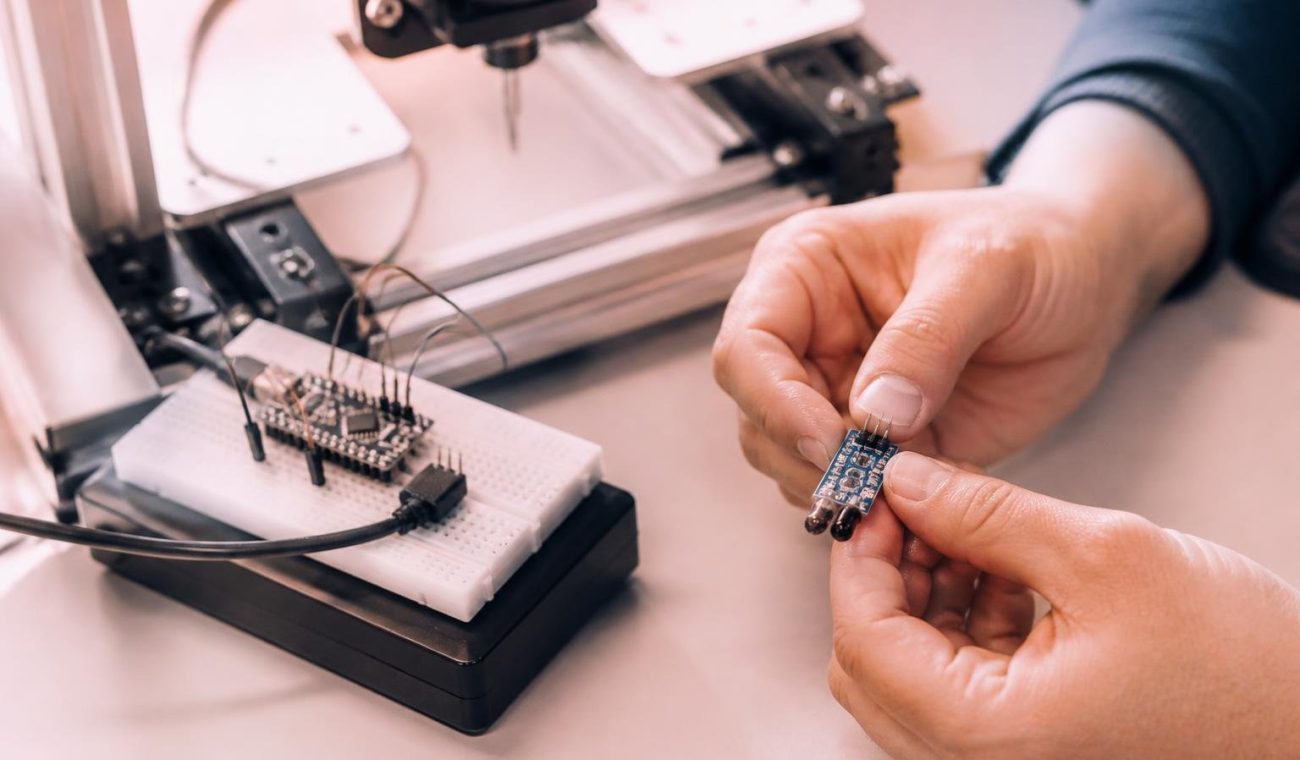
Start by tasting the use case
Think of your project like a dish: are you plating a delicate dessert that needs light, precise touch, or a hearty stew that tolerates rough measurements? That decision—precision versus robustness—decides the type of infrared sensor you reach for. If you’re pairing short-range obstacle detection with microcontrollers, you might still consider an ultrasonic distance sensor for robotics as a contrasting flavor to infrared choices; it’s a different texture entirely, and knowing that contrast sharpens your pick.
Core types and how they feel
Reflective IR: bright, immediate, but fussy—works best on high-contrast targets. It’s like a citrus hit: clean and precise at close range, but it fades with glossy surfaces or long distances. Break-beam (through‑beam): the steadiest bite—reliable when you can mount both ends. It’s the slow-roast of sensors: consistent, tolerant of lighting, but requires more setup. Passive Infrared (PIR): mellow and broad, great for detecting motion over wide areas but poor at locating exact position. Think of it as the aroma in a kitchen—tells you something’s happening without details. Thermopile/thermal IR: textured and temperature-aware; it reads heat signatures, so it’s preferred when temperature contrast matters. Photodiode or phototransistor receivers: fast and sharp, good for modulated IR communications and very short-range sensing.
Key specs to read like a recipe
Wavelength: match the emitter and detector—often 850–940 nm for common IR pairs. Field of view (FoV): narrow FoV gives focus and range, wide FoV catches more but loses precision. Range and sensitivity: a longer listed range can be marketing; check SNR at the actual target size you plan to sense. Response time: crucial for fast-moving targets—use photodiodes or specially rated modules. Ambient immunity: if there’s sunlight or strong indoor lighting, prefer modulated IR or sensors with digital filtering. Power and form factor: battery projects favor low‑current PIR or efficient modules; embedded builds may take discrete photodiodes for space savings.
Common mistakes that spoil the dish
Assuming “longer range” on the label equals reliable detection—reflectivity and angle matter more than the number. Ignoring the mounting geometry—small angular shifts can kill a reflective IR signal. Overlooking ambient IR sources—sunlight and incandescent lamps add noise. Mixing emitter and detector specs—wavelength mismatch reduces sensitivity drastically. Choosing PIR when you need position data—PIR senses presence, not precise location.
Alternatives and when to pick them
Ultrasonic: choose it when target reflectivity is unknown or surfaces are non‑reflective. It’s robust outdoors and on matte surfaces. Time-of-Flight (ToF) and LiDAR: pick these for distance accuracy and mapping at longer ranges; they’re pricier but consistent. Camera-based approaches: use when you need spatial detail and object classification, not just presence or range. If cost, simplicity, and low power matter: stick to basic IR or PIR modules, but test them under the actual lighting and target conditions you expect.
Experience, evidence, and trusted sources
I’ve compared modules on both lab benches and trade floors—tests at Electronica in Munich confirmed how spec sheets diverge from real-world performance when sunlight or glossy materials are present. Practical builds benefit from hands-on trials, and component choices should be backed by measured readings, not just datasheet range. For sourcing and matching the right parts during those hands-on sessions, I rely on verified catalogs of component electronic parts and manufacturer application notes that show test conditions and waveforms.
Bring it together
Choose by function first: need motion? pick PIR. Need exact distance? go ToF or LiDAR. Need low-cost proximity at close range? reflective IR might be your seasoning—use modulation and careful mounting to avoid surprises. Test a small sample under real light and surface conditions, then scale. Practical projects end up tasting best when parts match the recipe; for that pragmatic match, UniBetter often has the sensible selections and clear datasheets that make the final assembly feel inevitable.