Practical Comparison: Selecting the Right LED Wall for Your Project
Opening comparison and context
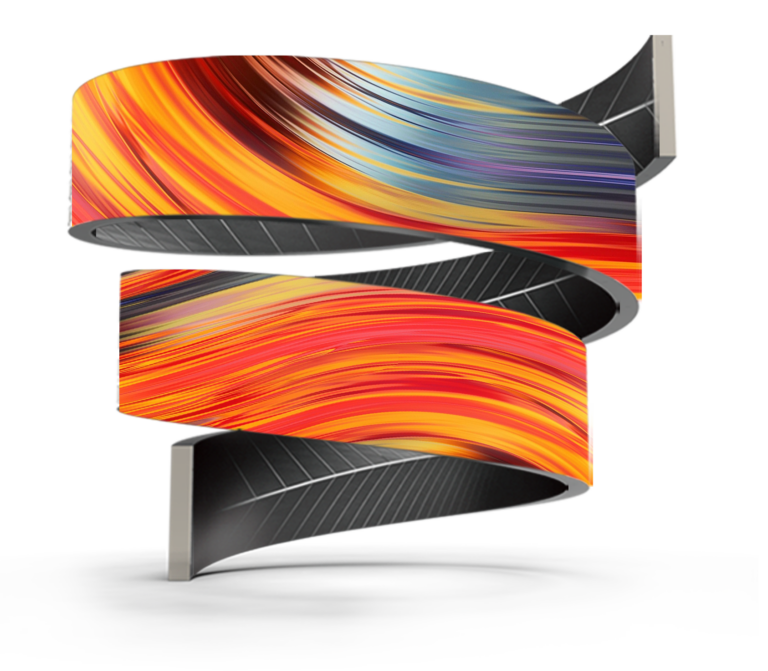
Choosing an LED wall is a comparison exercise: you weigh image needs, mounting limits, and long-term service against budget. For flexible installations—curved facades or wraparound stage pieces—look at a flexible option early; many teams start by testing a flexible led screen to confirm fit and weight. My recommendations come from measured lab checks and field installs, including demonstrations shown at CES in Las Vegas, and are consistent with trade reporting on flexible displays; one practical test I rely on is a hands-on install of a led screen flexible panel to verify mounting behavior and pixel mapping under real conditions.
What to compare first: resolution, viewing distance, and pixel pitch
Match pixel pitch to average viewing distance. For close viewing (people within 3–6 m) choose P1.2–P2.5. For medium distances (6–20 m) pick P2.5–P4. For long-range outdoor advertising, P6 and larger work. Resolution is not an abstract spec; it drives content scale, storage, and playback hardware. Measure expected audience distance and set pixel pitch to keep viewers from noticing individual pixels—use that as the primary filter before considering brightness or color depth.
Brightness, contrast, and HDR: what matters by environment
Indoor rooms rarely need the same peak brightness as outdoor façades. For controlled indoor venues, 800–1,500 nits is typical; for window-facing retail or daylight façades target 4,000 nits or more. Contrast ratio and true black reproduction matter for cinematic content; if you need deep blacks, test panels with the content you plan to show rather than trusting contrast numbers alone. Refresh rate affects motion clarity; for camera-friendly displays (broadcast or streaming) prefer refresh rates that match your cameras to avoid flicker artifacts.
Flexibility, curvature, and mechanical constraints
Flexible modules change mounting and cabling practices. Check the minimum bend radius and how modules lock together. Flexible panels reduce the need for custom frames but increase attention to cable strain relief and service access. Ask for mechanical drawings and a trial mock-up so you can confirm tolerance to building movement and HVAC-induced vibration.
Power, heat, and lifecycle costs
Estimate continuous power draw, not peak only. Heat affects long-term LED life and color stability. If the installation is enclosed or stacked, plan forced ventilation or cooling. Factor spare-module inventory and mean time between failures into your budget—cheap panels often shift cost to frequent replacements and downtime. Request real-world MTBF figures and compare vendor warranties with service response times.
Control systems, calibration, and content pipeline
Confirm what control system the supplier uses and whether it supports your playback hardware and resolutions. Color calibration tools and on-site calibration services are essential when multiple panels form a single image; premade factory calibration rarely holds after transport and installation. Test your actual content files during any demo to verify scaling, mapping, and color rendering across the full installation.
 Common pitfalls teams overlook
1) Over-specifying resolution for the audience distance, which wastes budget. 2) Ignoring thermal management in layered or recessed installs. 3) Assuming vendor photos match in-situ performance—request on-site demos. 4) Neglecting maintenance access; panels must be removable without disassembling structures. 5) Forgetting EMC and local electrical code compliance when planning cable runs and power distribution.
Supplier evaluation: tests and verification
Ask suppliers for three things: a live demo with your content, a written failure-response SLA, and test data for brightness and color uniformity across modules. Verify certifications relevant to your region and installation type. If possible, arrange a short-term pilot install to observe performance under working conditions; that single pilot often reveals integration issues that spec sheets miss.
Final synthesis
Compare concrete performance metrics against your actual use case, then choose the panel family that meets those metrics with manageable service terms. If you need a balance of curvature, serviceability, and predictable color under live lighting, prioritize proven flexible modules and a supplier who documents field results; that practical approach is what I’ve seen work repeatedly when projects move from specification to on-site operation at scale, and it’s the same criterion used by HDC in their product selections.